
 Image 1 of 7
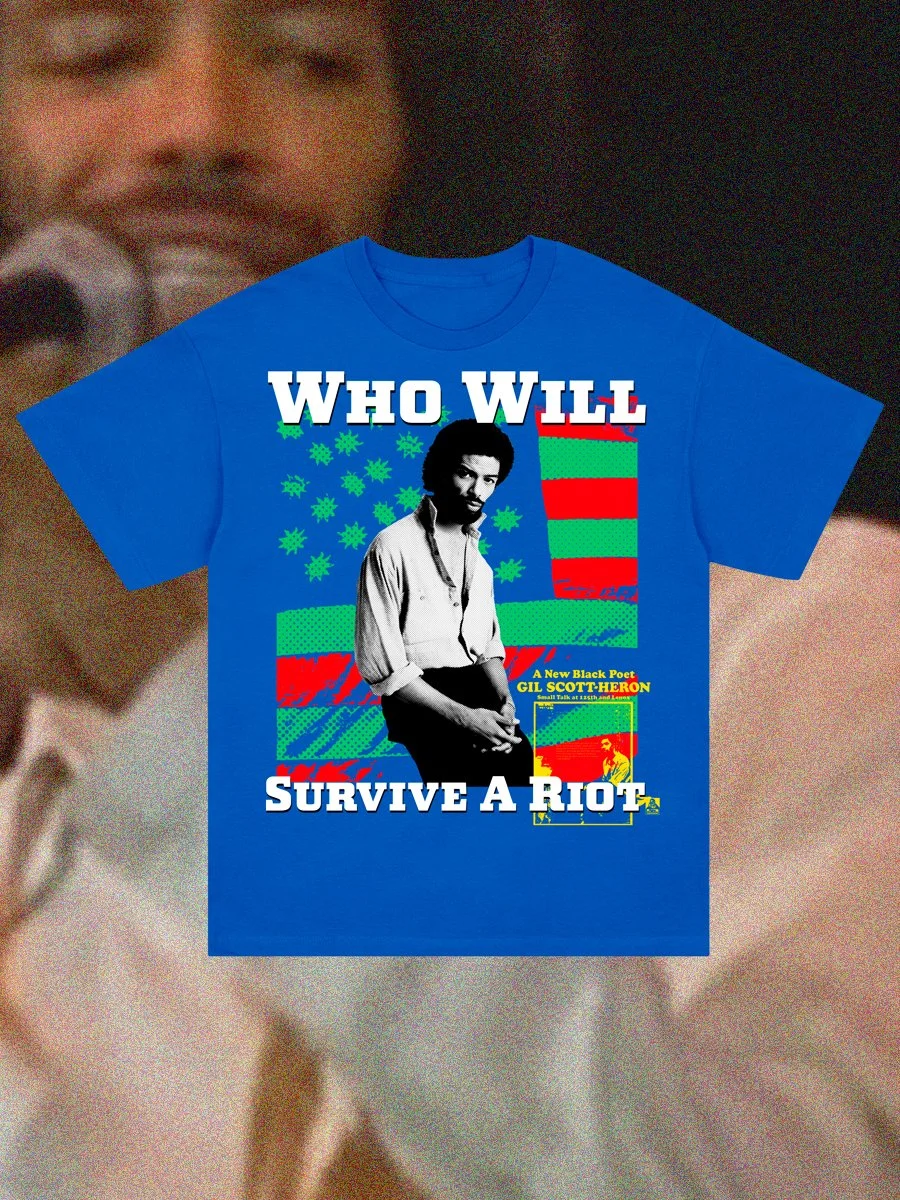 Image 2 of 7
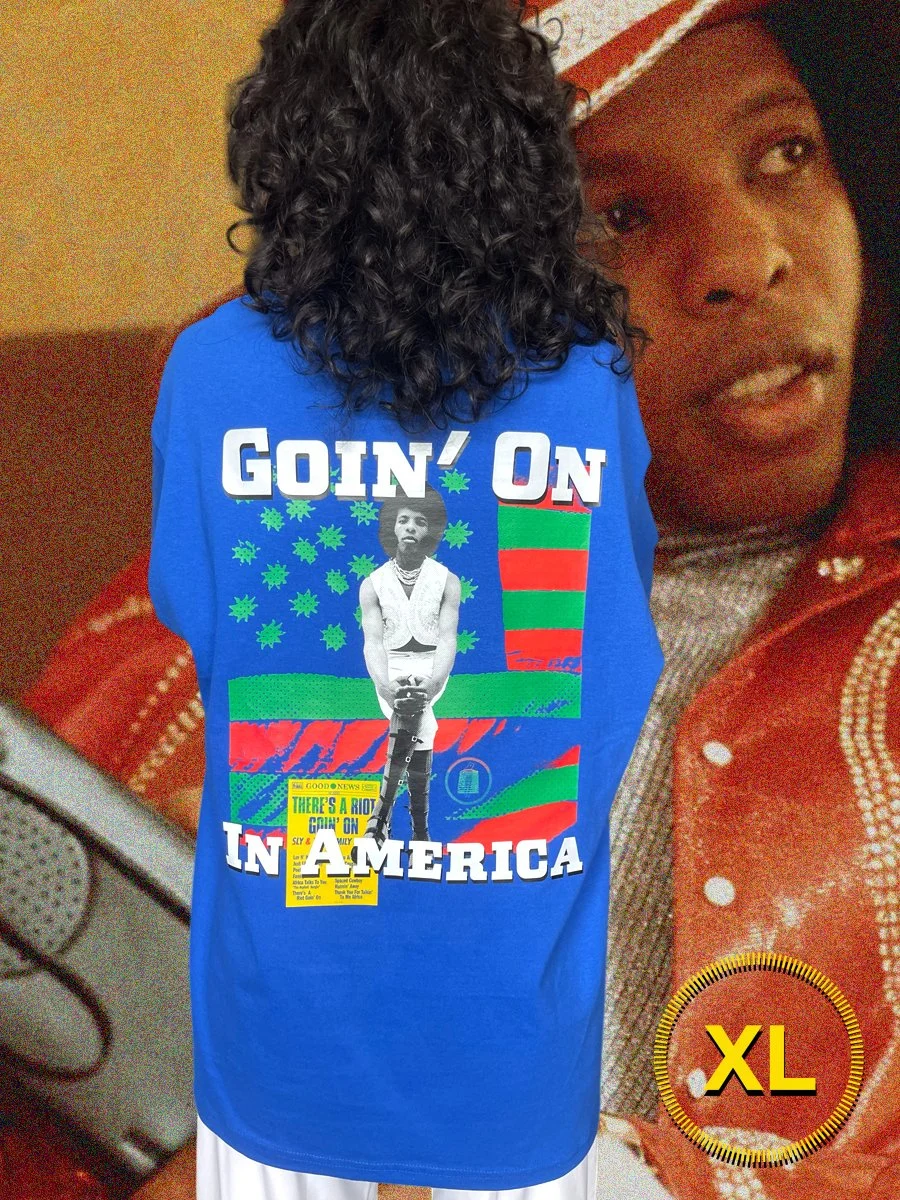 Image 3 of 7
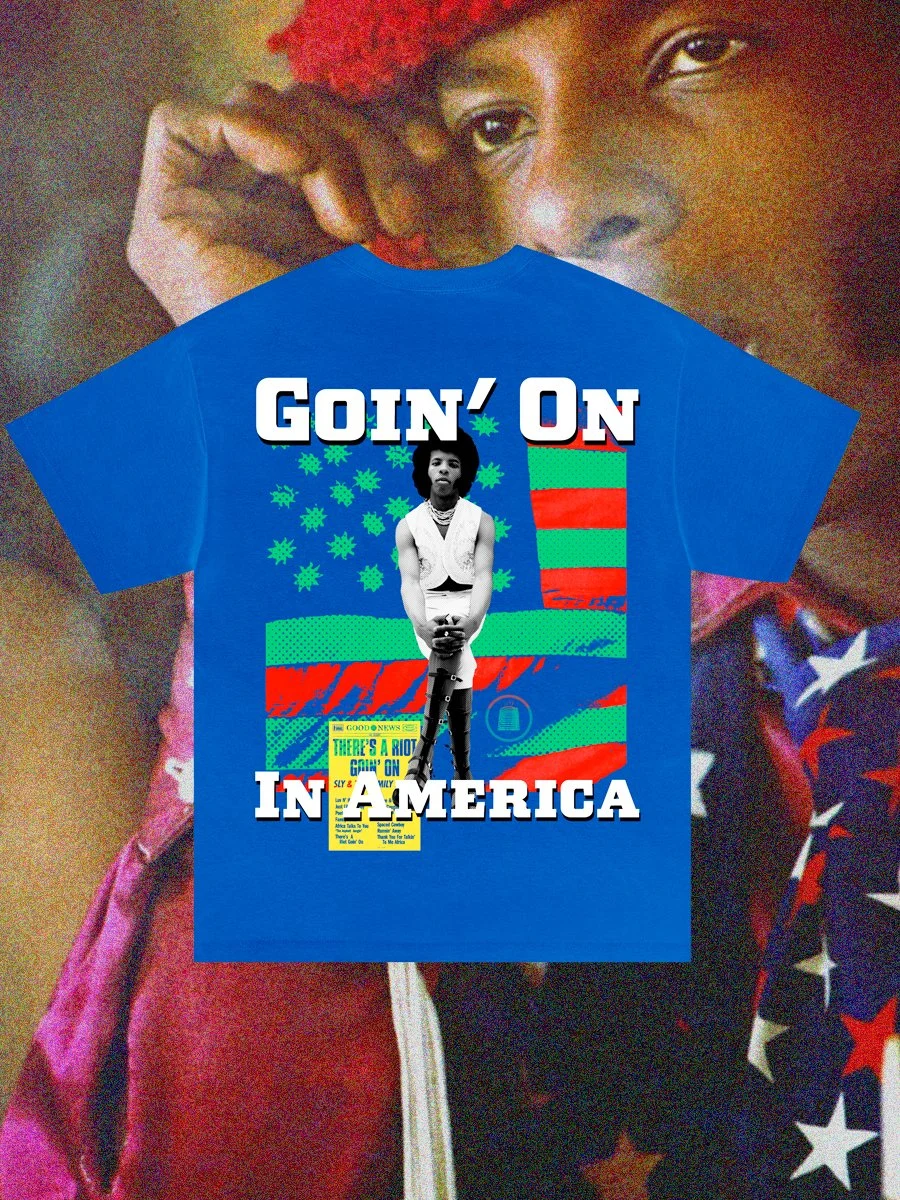 Image 4 of 7
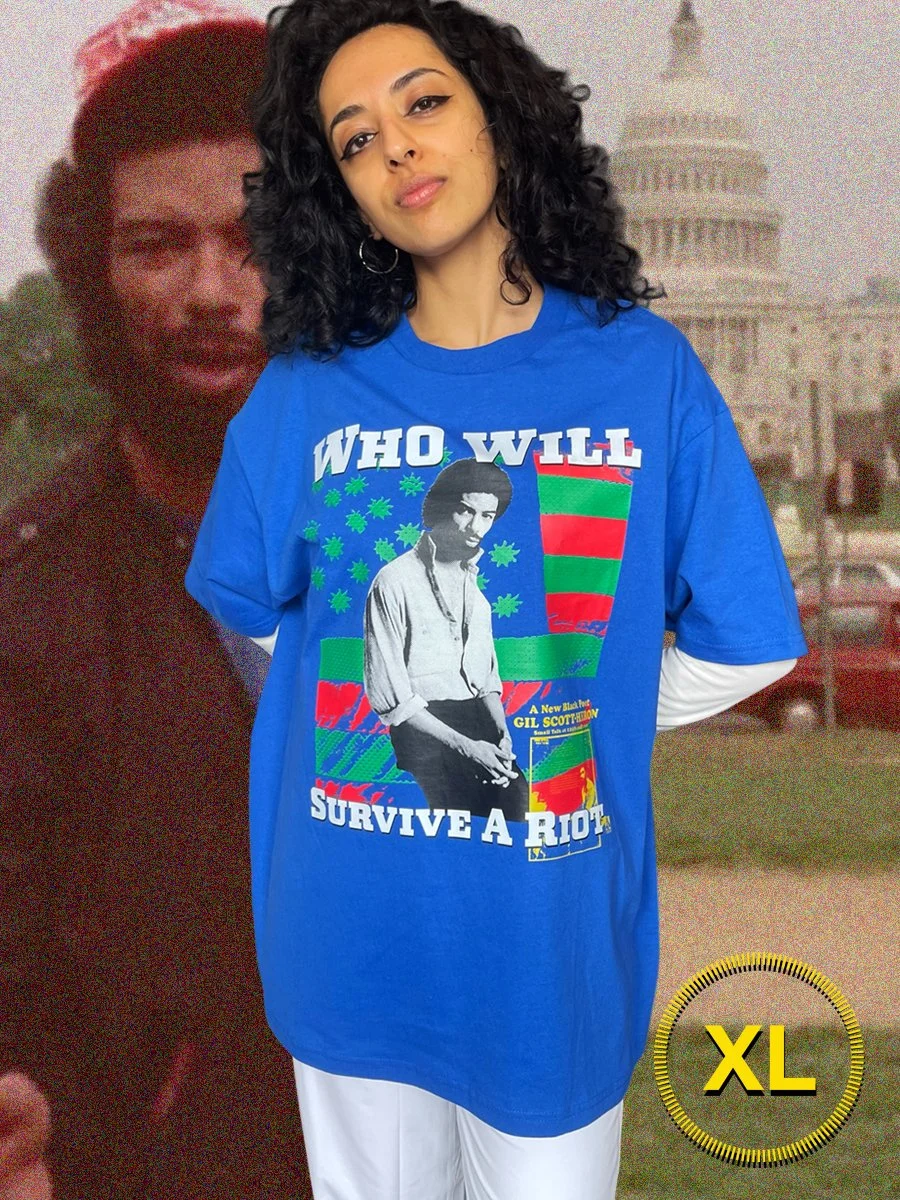 Image 5 of 7
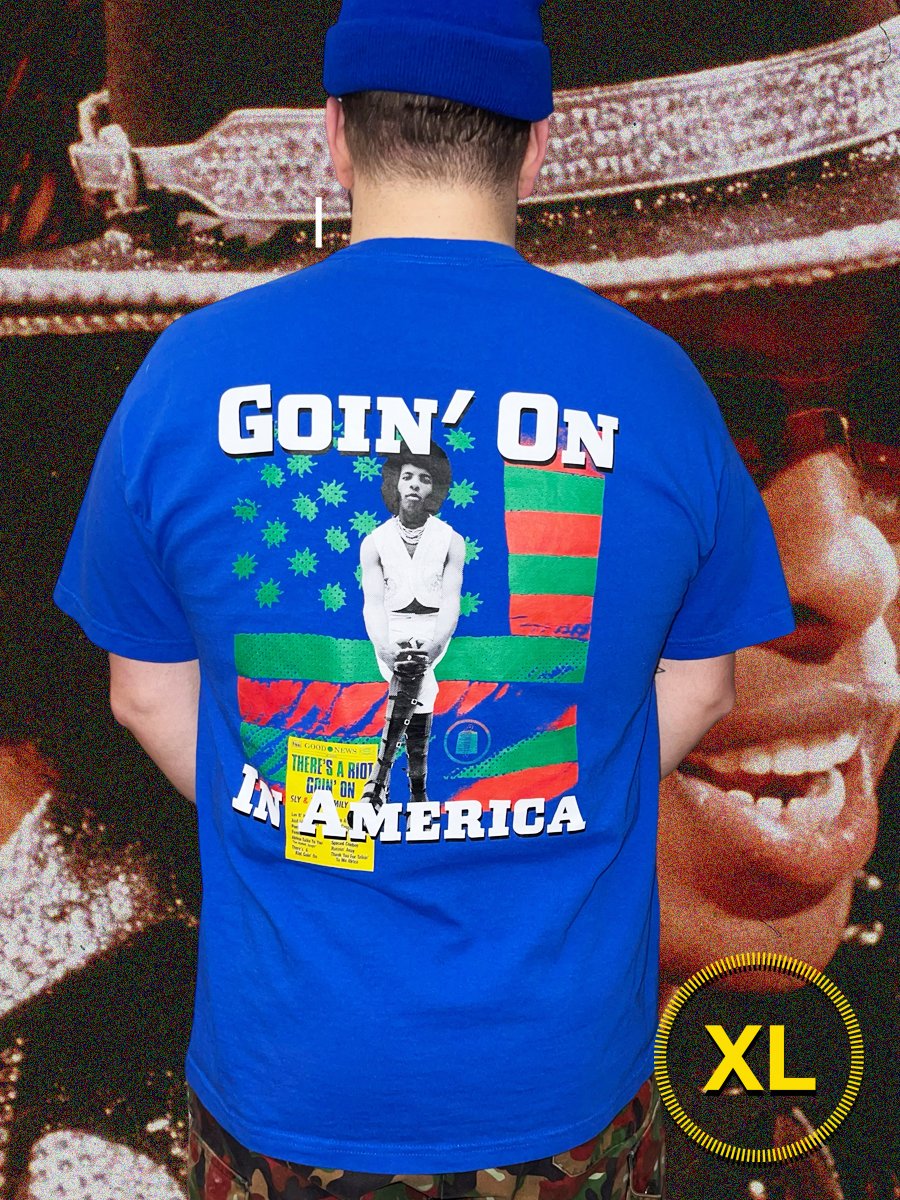 Image 6 of 7
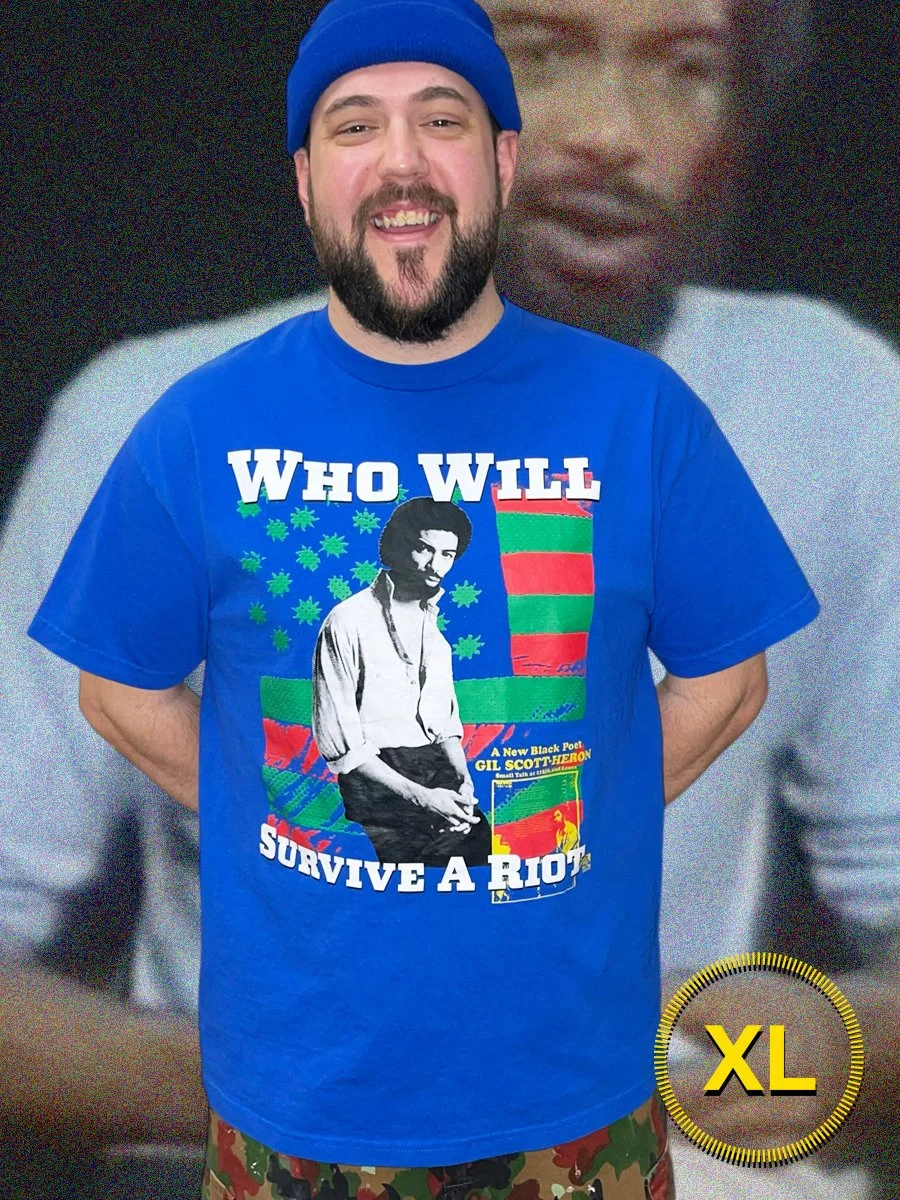 Image 7 of 7
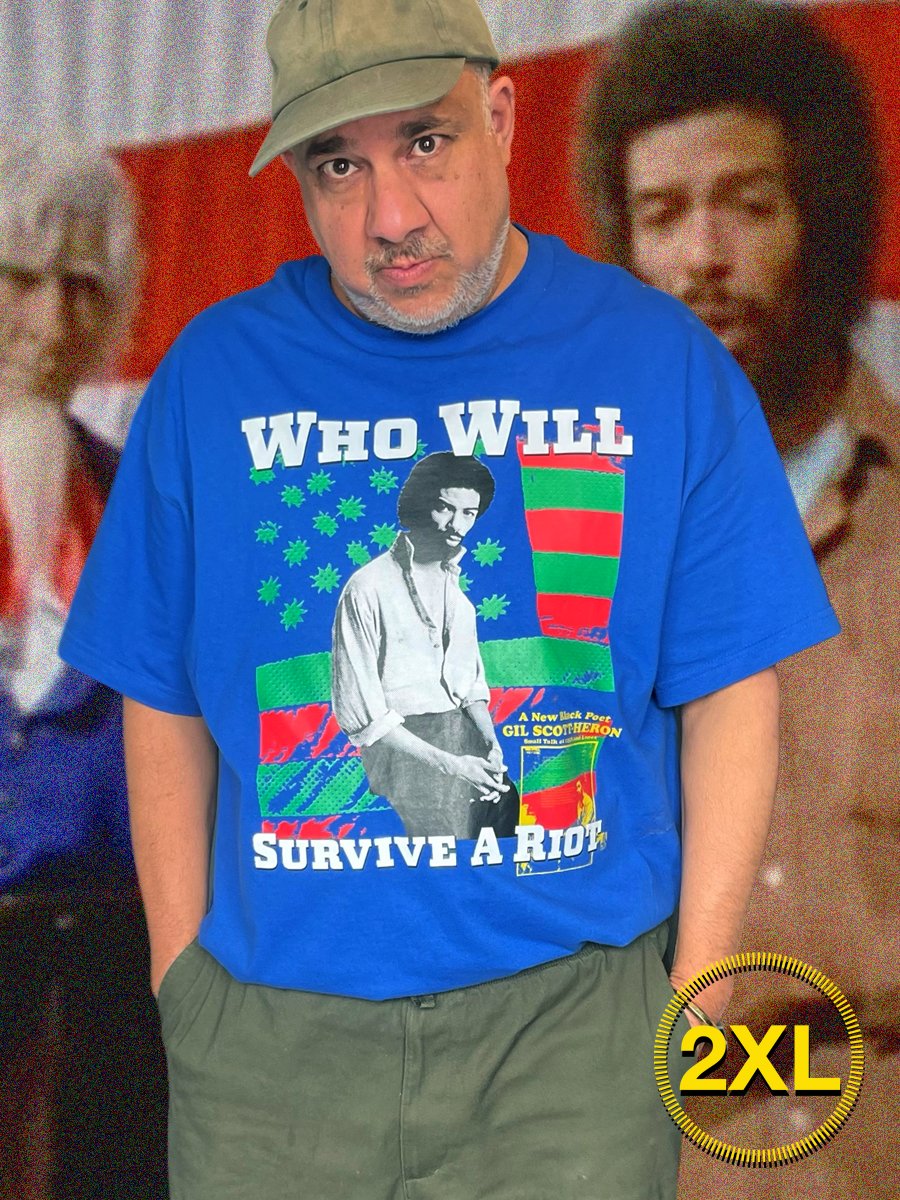
This shirt celebrates both Gil Scott-Heron and Sly Stone, two revolutionary pioneers of black music whose poems and songs were both intensely personal and political. The title is a combination of the last lines (Who Will Survive In America) from Heron’s poem Comment #1 featured on the live album “Small Talk at 125th and Lenox” and Sly Stone’s album “There’s A Riot Going On”.
Gil Scott- Heron’s “Comment #1” is a a searing critique of the American sociopolitical landscape in the late 1960’s using graphic imagery of sexual violence and disease to describe America's origin and the idealized version of the American "melting pot" (assimilation), arguing that for Black Americans, the experience has actually been a "toilet bowl"—a place of waste, confinement, and filth. It is also a rejection of performative activism and a demand for a revolution based on material reality rather than counterculture aesthetics.
While Scott-Heron was critiquing the revolution, Sly was reflecting on the disintegration of it. “There’s A Riot Going On” marked a radical turn away from the band’s previous "optimistic" and "idealistic" sound toward something darker and more challenging. He trades messages of hope and "togetherness" for themes of apathy, pessimism, and disillusionment with 1960s counterculture and the artist's own fame. The album is viewed as a resigned statement on Sly’s dysfunctional relationship with his country, effectively replacing "higher" aspirations with a "fuck you all" attitude toward the era's social decay.
Both artists reflections on society and politics feel eerily prescient when mapped onto the current political landscape of 2026 where a sense of national disillusionment and the constant rhetoric to counter social justice movements have given way to a more fractured, pessimistic cultural mood. Gil Scott- Heron’s final refrain that closes his poem “Who Will Survive In America” repeated several times, is perhaps the most relevant question in 2026. With the global retreat from human rights, the question of survival is no longer a metaphor. Instead it serves a reminder that in times of radical upheaval, survival is often determined by who the system was built to protect.